Many consumers have encountered the concept of organic food at least once while shopping, but not everyone can explain what actually distinguishes organic products from conventional ones. In this study, we present the most important differences between the two categories.
The term “organic food” refers to products that are produced in accordance with the rules set out in European Union regulations governing the production, processing and labelling of organic food. According to the regulations in force, products can be described as “organic” if at least 95% of their agricultural ingredients come from certified organic production, carried out in accordance with strict requirements.
Such products are marked with the EU Euroleaf symbol – a distinctive green mark with white stars arranged in the shape of a leaf.
Production method
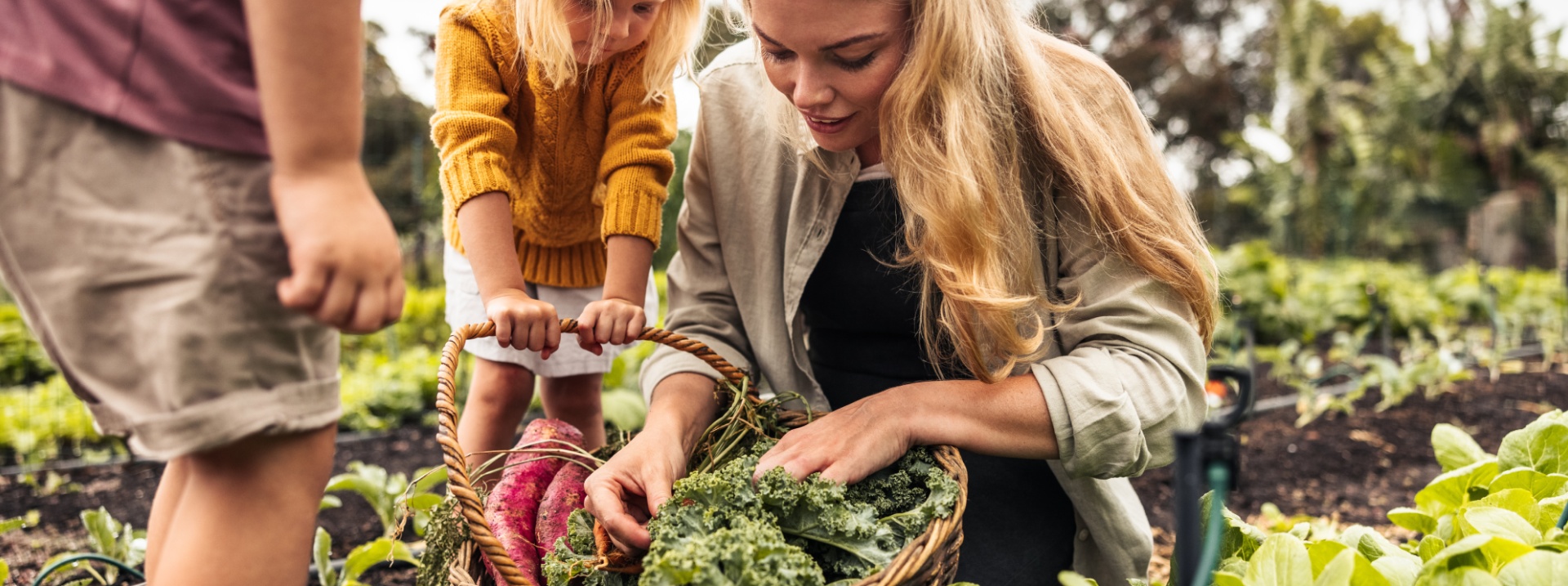
In organic farming, the use of synthetic plant protection products and artificial fertilisers, which are common in conventional farming, is prohibited.
However, this does not mean that organic farms do not use any crop protection methods. They may only use products that are
- approved for organic farming,
- based on natural raw materials,
- supplemented by mechanical methods such as manual weeding,
- and organic fertilisation, such as compost or manure.
Food processing
In the case of conventional food, producers can use a wide range of technological additives – colourings, preservatives or stabilisers – as long as they are on the list of substances considered safe.
In organic food, the list of permitted additives is much more limited and includes only a small number of substances of natural origin specified in EU regulations. Each additive must be listed separately in the relevant regulations on organic production.
Product labelling
Organic products are clearly identifiable by their distinctive logo – a green leaf with 12 white stars. The following information should also be displayed on the packaging near this symbol:
- the number of the certification body,
- information on the origin of the ingredients, e.g. ‘EU agriculture’, ‘non-EU agriculture’ or ‘EU/non-EU agriculture’.
Conventional products do not have a uniform labelling system. Their packaging may feature various graphics, often stylised as “natural”, which, however, have no connection with organic certification, which can be a source of confusion.
Bibliography
Gadomska, J., Sadowski, T., Buczkowska, M. Organic food as a health-promoting factor. Probl Hig Epidemiol 2014, 95(3): 556–560.
Kwasek, M. (ed.). Food systems. In: From research on socially sustainable agriculture. 2018: 19–20.
Malinowski, Ł. et al., Food from organic and conventional farming and methods of labelling it. Agricultural, Horticultural and Forestry Technology 4/2019: 17–20.
Commission Implementing Regulation (EU) 2021/1165 of 15 July 2021.
Council Regulation (EC) No 834/2007 on organic production and labelling of organic products.
Regulation (EU) 2018/848 of the European Parliament and of the Council on organic production and labelling of organic products (currently in force).
European Commission – Organic Farming (official EU portal):
https://agriculture.ec.europa.eu/farming/organic-farming_en
European Commission – EU Organic Logo Guidelines:
https://agriculture.ec.europa.eu/farming/organic-farming/organic-logo_en


