Imagine that most vegetables, fruits, and nuts suddenly disappear from our tables. This is a realistic scenario, because according to the Food and Agriculture Organization of the United Nations (FAO), as much as 75% of the world’s main crops depend on the work of bees and other pollinating insects[1]. Unfortunately, pollinators are declining. The answer to this crisis is organic farming. How does choosing products with the Euroleaf logo help bees survive?
Bees in Europe need help
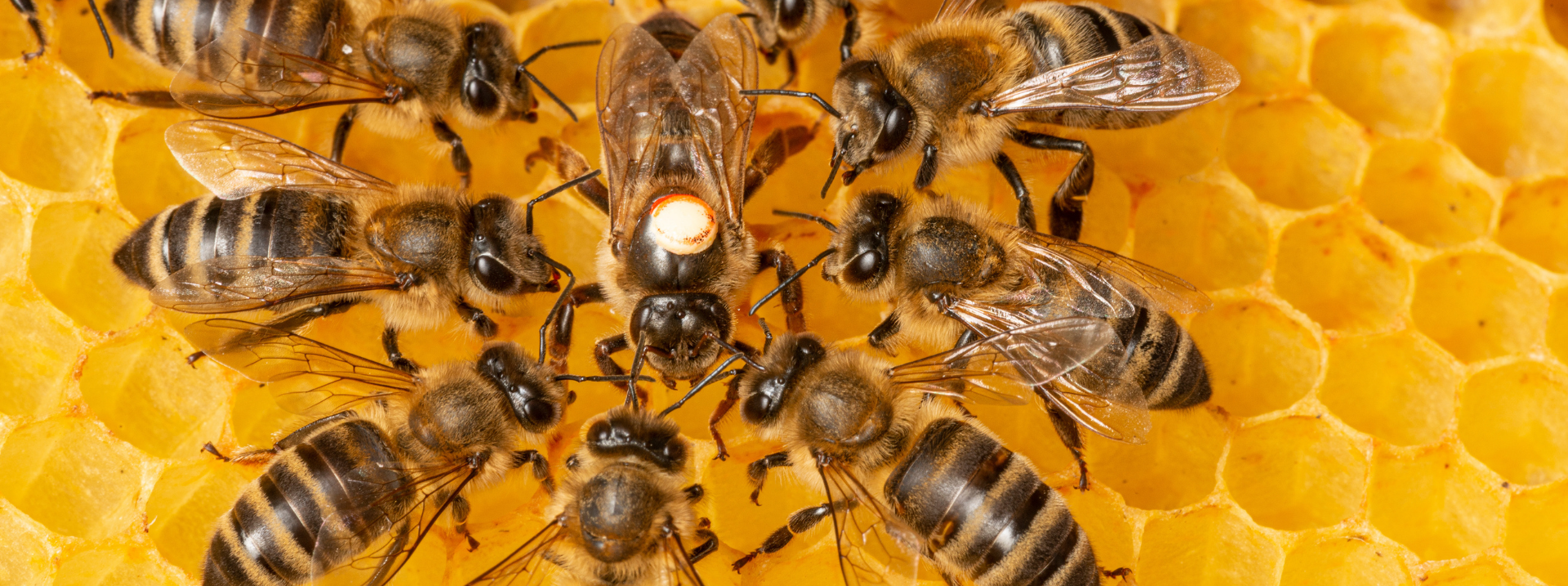
Data from the European Parliament and the European Red List (IUCN) show that there are over 2,000 species of wild bees in Europe alone[2]. Unfortunately, their future is uncertain. The main culprits are climate change and agriculture based on large monocultures (huge fields sown with only one plant) and the intensive use of synthetic pesticides. For bees, such an environment is extremely hostile.
Euroleaf, a safe chemical-free zone
Certified organic farming is changing the situation. Farms applying for the EU certificate (Euroleaf) must meet strict standards. According to the European Commission’s guidelines, it is a system that works in harmony with nature. What does this mean for bees in practice? First of all, there is a total ban on the use of synthetic fertilizers and chemical plant protection products. Instead, farmers use natural compost and fully permitted, biological protection methods. The elimination of pesticides makes organic crops a safe zone where insects can collect nectar without fear.
Diversity in the field means a full belly for the bee
Ordinary, conventional fields are often “green deserts” for insects – when the main plant finishes blooming, bees simply have nothing to eat. Meanwhile, organic farming prioritizes biodiversity. Studies by IFOAM Organics Europe prove that certified crops tangibly support the ecosystem. On the edges of such fields, we can find balks full of herbs and wild plants. They constitute a rich, diverse “buffet” for bees, essential to feed bee families throughout spring and summer.
Your choice at the shelf has enormous power
Every product with the EU organic farming logo placed in your basket is a clear signal to the market and an impulse for farmers that we need food that is planet-friendly. According to the assumptions of the European Green Deal – under the “Farm to Fork” strategy – by 2030, as much as 25% of agricultural land in the EU is to be farmed organically[3]. Our everyday consumer decisions directly support this goal, step by step expanding safe territories for pollinators.
Summary: why is it worth looking for the Euroleaf?
- Certification (Euroleaf) guarantees crops free from synthetic pesticides, which are the main cause of bee mortality.
- Moving away from monocultures and caring for biodiversity provides bees with food throughout the growing season.
- By protecting bees, we secure the yields and crops that global food production depends on.
- By reaching for organic products, we stimulate the growth of environmentally friendly crop areas.
References:
